Through history, operas act as a vessel for change, often by liberating stories told by those involved.
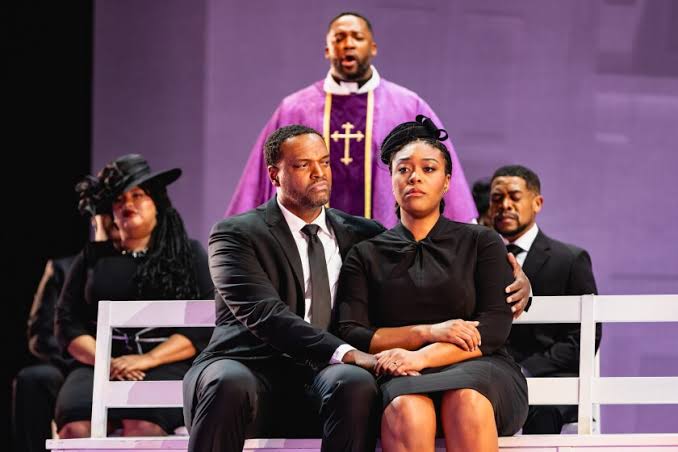
The father (bass Kenneth Kellogg) and mother (mezzo-soprano Zoie Reams) of a slain teenager grieve in the Lyric Opera production of “Blue.” | Kyle Flubacker
For centuries, opera singers have belted out stories of activism.
Today, operas may not be as predominant as viral songs, protests, dances or musical theater, but they still pack a punch. These three contemporary operas discuss tension points in America with vibratos that spark fire and prompt change, one note at a time. Call it operatic restitution.
Blue, a 2019 opera, revolves around race, police violence and grief in Harlem, New York City. This opera depicts the joy and loss of life, as it follows a Black family growing together. The joy comes to a halt when a police officer shoots the teenage son, bringing tragedy. The father in this piece is also an officer, adding nuance and conflict to grief. Blue becomes relevant when one takes into account that police officers took the life of 299 Black people in America in 2019. The following year, George Floyd would lose his life in a killing that would spark outrage around the world.
The Central Park Five, a 2019 opera, is based on a true story about five Black and Latino men who were wrongfully accused and convicted of sexual assault of a female jogger in New York City in 1989. This opera depicts racial inequity and the reality of the criminal justice system. The five are eventually exonerated based on clear evidence that tied the crime to another man, yet they were held for five years at minimum, and 13 years at most. It brings into question how diligent those in authority act when pressed with public pressure and not enough proof. This opera, though a retelling of a story, acts as a sign of the times when 78% of exonerations were people of color in 2025. Even so, the man who took out a full-page ad in newspapers shortly after their arrest, calling for the reinstatement of the death penalty based on their presumed guilt, is now president of the United States.
Proximity, a 2023 opera, tells a trio of stories about gun violence and gang warfare, but offers a nuance of negligence that leads to these tragedies. This opera depicts the reality of gang violence and tragedy, in which a Chicago neighborhood awaits the return of their wise peacemaker, Bilal, who has faced prison time for gang violence and has since learned from his mistakes. As one gang puts together an armistice in preparation, a new gang starts trouble and shoots a member of the gang seeking peace, re-starting the war that never ends. This opera demonstrates the tragedy of the never-ending cycle of gang warfare. Gordan Hawkins, a performer in the opera, says that the opera is “very much now.” In 2024, a person died of firearm violence once every 12 minutes in the United States resulting in 44,447 deaths.