As federal immigration enforcement intensified across Minnesota, I found meaning in covering how student artists responded.
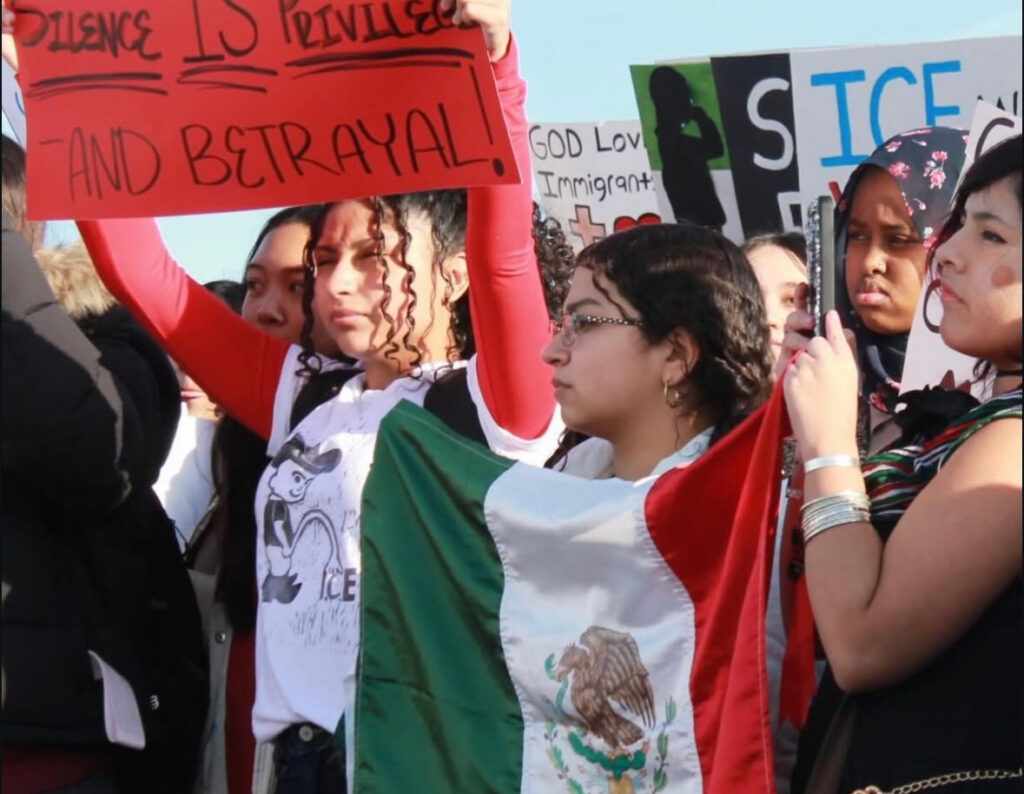
It was an unusually sunny day in February when I sat inside Bordertown Coffee, staring down at a notebook rather than a latte. I played with my pen and checked the time: almost 2:30 p.m. In just a few minutes, I would begin one of the most meaningful journalism projects I’d complete during my time as an undergraduate: a deep dive into how students at the University of Minnesota were using art to respond to changing times.
I was doing this when it mattered most. Operation Metro Surge abruptly disturbed life across the Twin Cities, blanketing communities in fear during the coldest months of the year. To be an outsider — a disturber — was to be at risk of detainment, or worse. I watched anxiously from the comfort of academia searching for a way to get involved.
Journalism at that point had been a new development in my life. I began taking reporting classes in the spring of my freshman year of college, thinking that working in a newsroom would be a productive way to use my love for writing.
I published my first piece that summer, and I applied for the Minnesota Daily a few months later. Between an early-morning job at the student union and full class schedule, working for the school newspaper was one of the last things I wanted to add to my agenda. But I figured I should give it a try to see if journalism was something I wanted to pursue.
To appease the part of myself that wanted to spend my free time watching TV instead of interviewing people, I accepted an arts and entertainment position. The growing pains certainly existed — my first editing session left me shaking and stressed — but I found myself strangely excited by the work.
Attending film premieres and covering seasonal festivals soon became the norm. But when the first reports of Immigration and Customs Enforcement shooting a woman arrived, the job took on a more serious note.
When ICE agents rolled into the state, my peers and I were cautious. When their numbers continued to rise and people were stolen off the streets and killed, we mobilized.
My colleagues — who were students themselves, still learning AP style and how to cook more than Mac and Cheese for dinner — spent their days in the community and nights writing in the dingy office. Under fluorescent bulbs, they followed up on students who were deported, documented struggling local businesses, and kept a pulse on how the University dealt with ICE.
As the news grew more ominous, I tried to show up. I went to vigils and handed out hot coffee on chilly days in Powderhorn Park, where outraged Minnesotans packed the snow underfoot with their marching and mourning.
But despite the days in the cold, I didn’t feel like I was doing enough. I knew I could be doing more to help the city that had become my home.
For a while, I felt paralyzed. I didn’t know how to start, but the longer I idled, the heavier the responsibility to contribute something grew. So, I opened my ears, got outside and talked to people.
It started small. Inquiries with friends over how they’d been using art in their own resistance turned into suggestions of artists to connect with. Despite having already been plugged into the activist scene, I felt I was seeing creatives and their inspirational art with new eyes.
I sought out students who used art to push back against cruelty in their community, getting to know them and their art before broadcasting it to readers at the University. Talking to people and producing stories made me feel like I was able to make a small difference for those on campus.
Alex V. Cipolle, an arts reporter and critic at Minnesota Public Radio, also found herself deeply entrenched in covering the arts community over the winter. Whether at work or home in South Minneapolis, Cipolle felt like something was always about to happen.
“As a reporter, you really, really want to be there to bear witness to all of it,” Cipolle said.
In a time when people disappear in the middle of the day, documenting every moment feels necessary. For the art-minded, that means chasing and memorializing creativity.
Even when off the clock, Cipolle often found herself pulled into moments of artistic resistance. One evening, shortly after federal agents shot and killed Alex Pretti, Cipolle learned that people were planning to put up candlelight vigils throughout the city. She hopped in her car and drove, observing how candles lined the streets from South Minneapolis to West St. Paul, clutched in the hands of solemn witnesses or propped in the snow.
“It became a night I’ll never forget because I’ve never ever seen anything like it,” Cipolle said. “It just felt so important to capture that and make sure it went down in the historical record.”
There were no glistening candles when I sat in Bordertown awaiting my interviewee, but I felt a light inside of me regardless. Reporting and writing had given me a way to learn more about my community and give something back to them, even if that meant just a few words on a website.